
What Gets Edited Out in the Room
Written by Derek Mulhern, PCC

As leaders, we spend a lot of time trying to read the room. What's the energy? Who's engaged? Where's the resistance coming from?
What we rarely stop to ask is: what's the room not saying?
That question came into focus for me recently in a coaching conversation. My client was starting to see how authority, even well-intentioned, teaches people to edit what they share before they say it. It's one of those dynamics that lives just below the surface of most teams. And once you see it, you start noticing it everywhere.
Happy reading!
I was working with a client recently who'd stepped into a newer leadership role and needed to stand up a handful of programs.
The catch? These programs were a real departure from how the organization had always operated.
Standing up the programs wasn't the hard part.
The hard part was enrollment.
Getting buy-in from her manager, from the leadership team, from the people whose support would actually determine whether any of this worked.
She tried, and tried again. And it kept feeling like resistance.
The Pattern She Didn't See in Herself
Through our conversations, she realized it wasn't resistance.
It was her own assumption: the leader is in charge, so the leader's word is what matters most.
Whenever her manager shared thoughts on how things had been done before, how other programs had been run, my client took it as the final word.
She deferred instead of pushing back.
And that instinct didn't stay contained to her — it shaped how she led her own team, too.
They watched her defer, and started deferring right alongside her.
Nodding along in meetings instead of weighing in.
My client, understandably, mistook the nodding for agreement.
It wasn't agreement. It was editing.
Why This Happens in Every Room
This is one of the more overlooked dynamics in leadership.
It has almost nothing to do with whether the leader is good or bad.
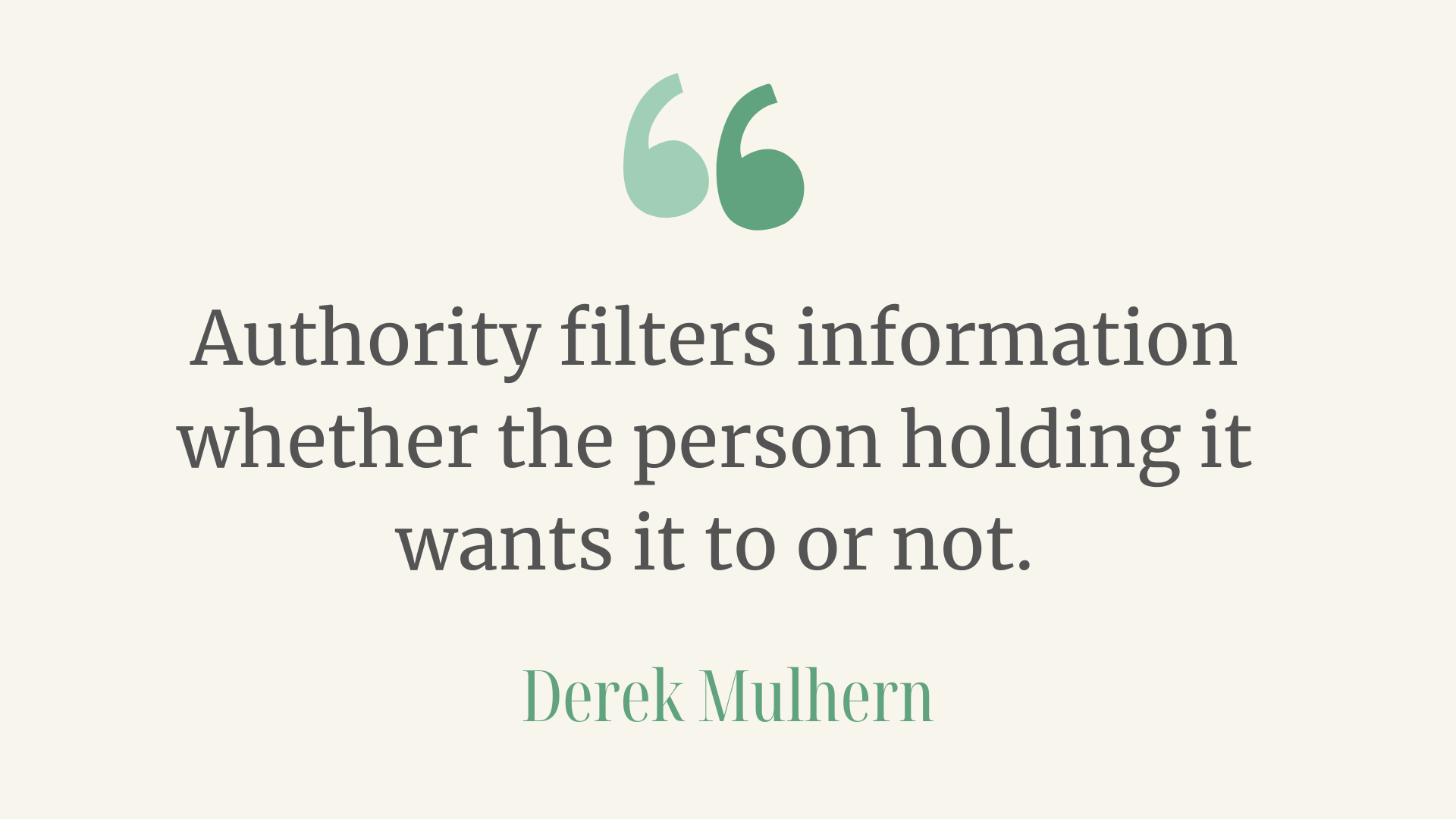
The moment someone has a title, a vote, or the final word, the room changes.
Sometimes out of habit.
Others out of fear, or a belief that "that's not my place to say."
People edit before they speak.
And most leaders never see the edited version for what it is.
And sometimes, neither does the person one level below them, even as they're doing it themselves.
If You're the Leader
Here's the part that matters: asking for input doesn't undo this.
"What do you think?" often reads as performative.
So here's my offer — get curious and invite perspectives.
Curiosity that actually breaks through editing to authority figures is often specific.
Name the tension directly:
"I imagine some of you see this differently — what am I missing?"
It does more than an open floor ever will.
The job isn't to invite disagreement. It's to make disagreement expected.
If You're on the Team
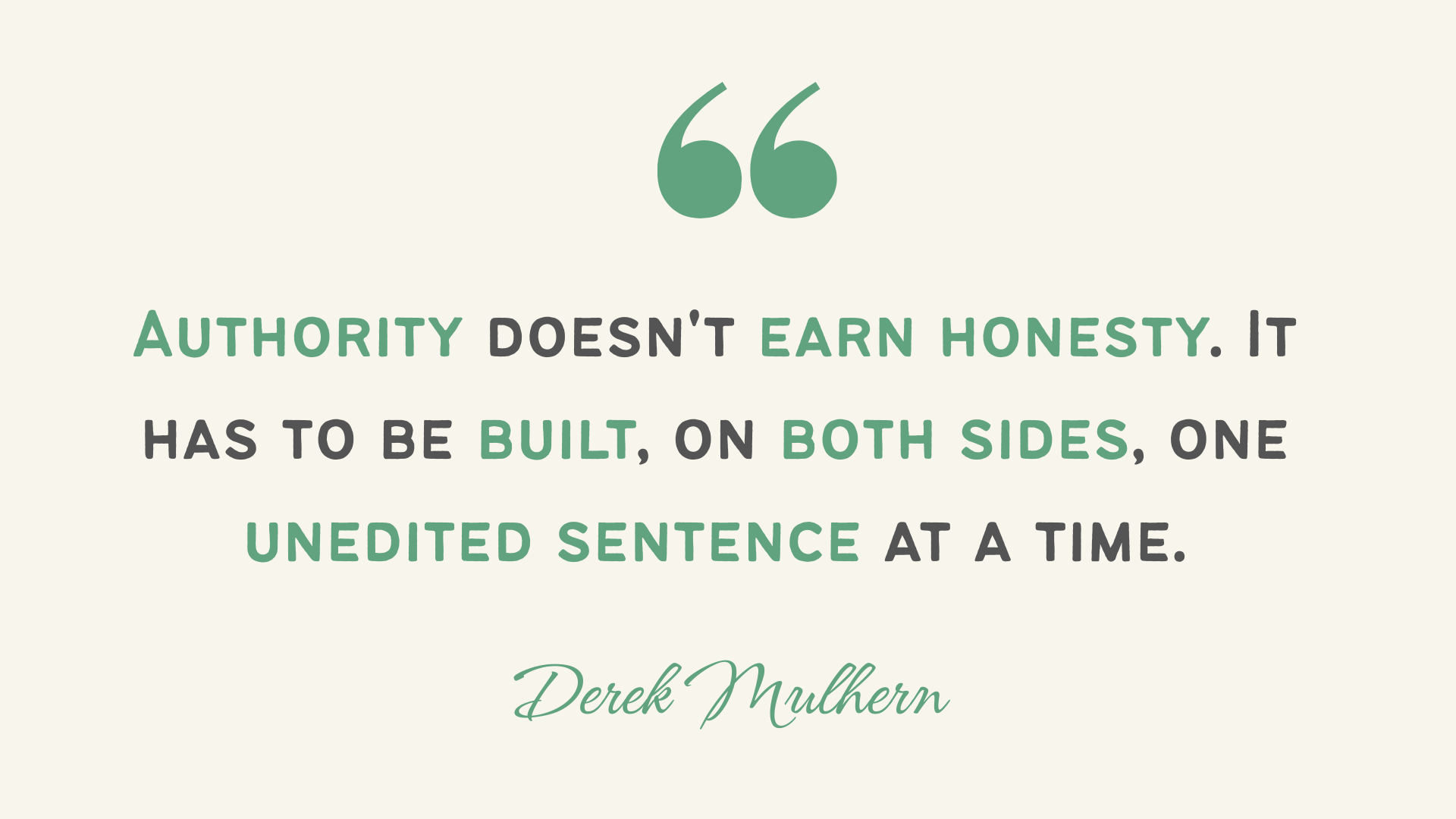
The instinct to edit isn't always wrong. It's just rarely tested. Most people never find out whether the unedited version would've landed, because they never say it.
So start with a small move. Say the lower-stakes version of the true thing…
…and notice. Did the room actually collapse? Usually, it didn't.
The Challenge
So here's the challenge, whichever seat you're in…
In your next real conversation — a team meeting, a one-on-one, a board discussion — notice what you edited out before you said it. Then ask yourself if it needed to be cut at all.